Specialty electrical wiring covers the dedicated-circuit and special-equipment installs that don’t fit the general residential or commercial scope. Each scope has its own code section, its own equipment-specific requirements, and its own typical pitfalls. Hot tub wiring, dedicated circuits for high-draw equipment, smoke and CO detector wiring, service mast and meter socket repair, and specialized disconnect installs all live here.
The common thread is “single-purpose install with specific code.” The work doesn’t scale by adding more circuits; it scales by getting each specific install right. We treat each specialty scope as its own project.
Specialty work is bounded but the consequences of getting it wrong are real. Hot tub wiring without proper GFCI protection or bonding kills people. Smoke detectors without proper interconnect or battery backup fail when needed. Service mast repair without proper utility coordination puts linemen at risk.
Hot tub and spa wiring per NEC 680
Hot tubs require a dedicated GFCI-protected circuit sized to the tub’s amperage (typically 50A 240V), a manual disconnect within sight of the tub at the required distance, weather-rated routing from the panel to the disconnect to the tub, and equipotential bonding around the tub structure per NEC 680.26.
The bonding requirement is the part most people don’t see. NEC 680.26 requires a bonding grid around the tub that ties together all metal parts (tub shell, deck reinforcing if metal, water heater if applicable, water circulation pump). The grid prevents voltage gradients across the tub and the surrounding deck.
Permit and inspection are non-negotiable for hot tub installs. When an inspection is required, the inspector verifies the GFCI device, the disconnect location, the equipotential bond, the conductor sizing, and the weather-rated routing. When the AHJ requires a permit, we pull it and meet any inspector for sign-off.
Dedicated circuit installation
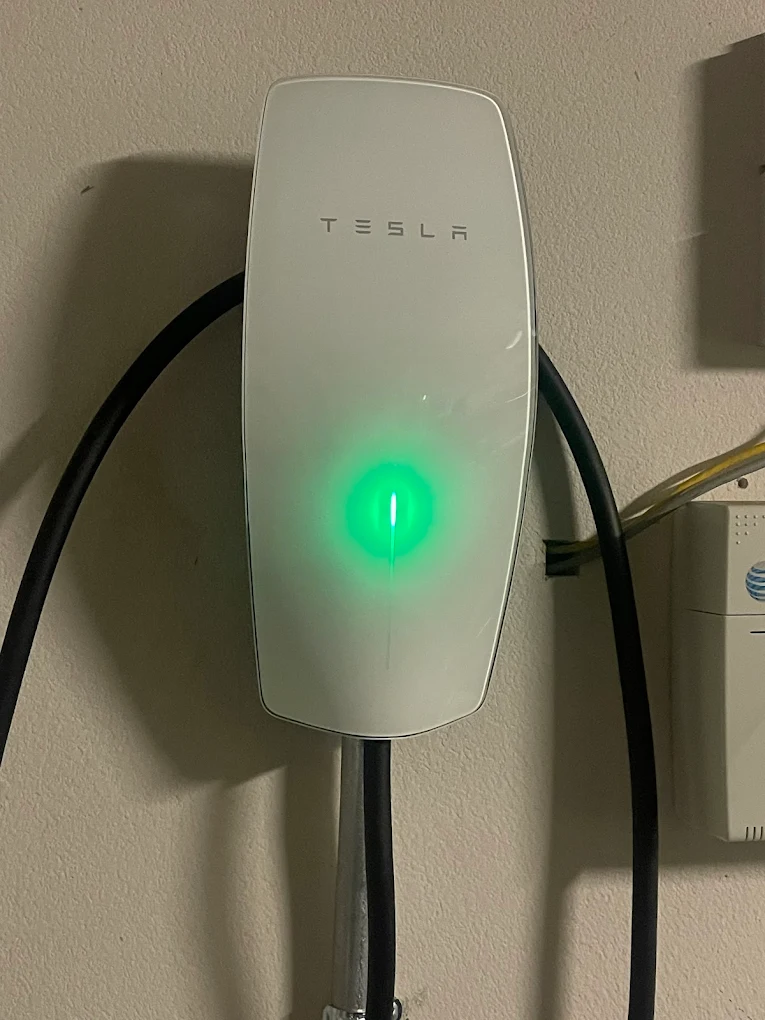
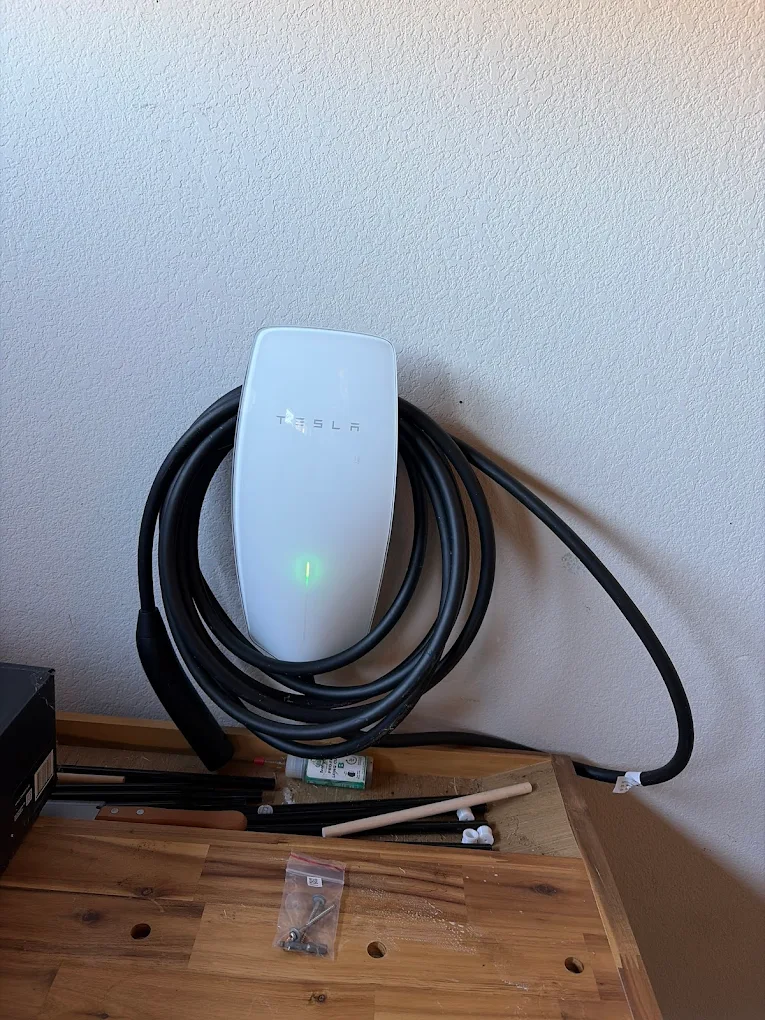
Dedicated circuits run from the panel to a single piece of equipment with nothing else on the circuit. Common dedicated circuits: EV chargers (NEC 625), hot tubs (NEC 680), large appliances (range, dryer, oven), well pumps, sump pumps, large workshop equipment (table saws, dust collection, welders), home offices with high-draw equipment, and home theater systems with significant amplification.
Sizing follows the equipment nameplate. The circuit ampacity matches the equipment’s required circuit per the manufacturer’s instructions. The breaker matches the conductor ampacity. Conductor sizing accounts for circuit length and voltage drop on long runs.
Most dedicated circuit installs run 2 to 6 hours depending on wire run length, panel access, and any obstacles in the path.
Smoke and carbon monoxide detector wiring
Smoke and CO detector requirements depend on local code adoption. NFPA 72 governs the requirements. Most current codes require interconnected hardwired smoke detectors with battery backup in every bedroom, outside each sleeping area, and on every level of the home. CO detectors are required outside each sleeping area in homes with attached garages, fuel-burning appliances, or attached fireplaces.
Interconnected detectors trigger together. When one alarm activates, all of them sound. The interconnect is a third conductor in the cable to each detector (in addition to hot and neutral) that signals between the units.
Wireless interconnect is an option for retrofits where pulling new wire is impractical. The wireless devices use a proprietary signal between units to trigger the same group-alarm behavior.
Detector replacement schedule: smoke detectors every 10 years, CO detectors every 5 to 7 years (varies by manufacturer). We can replace detectors during electrical service visits or as part of inspection follow-up.
Service mast and meter socket repair
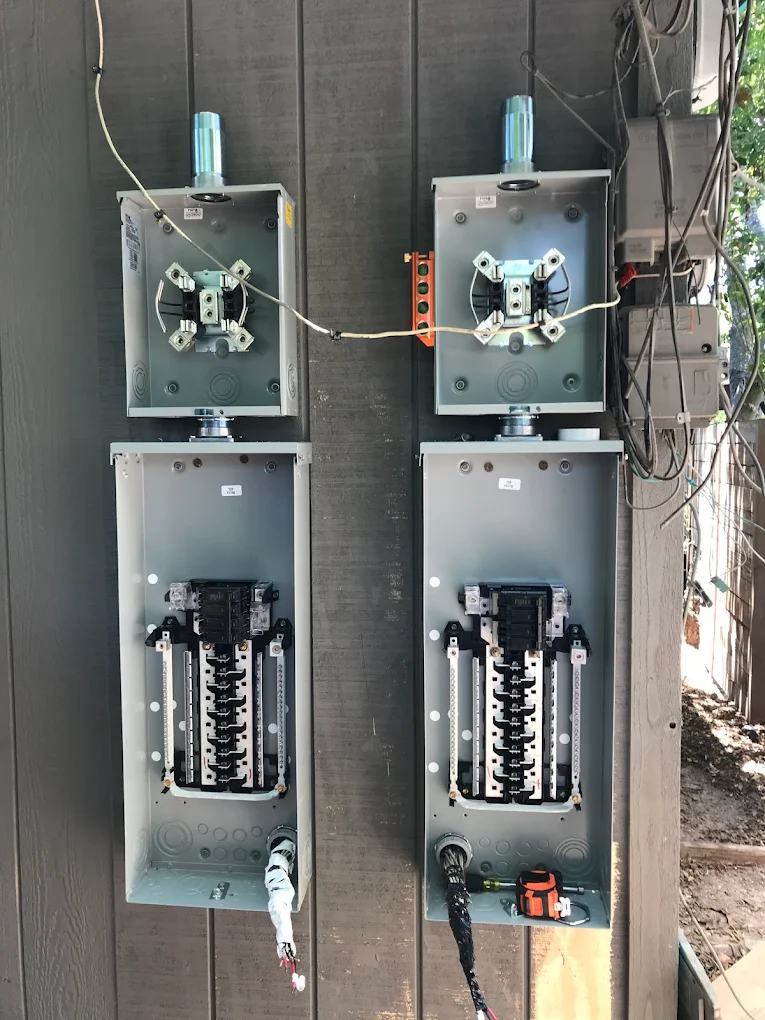
The service mast is the conduit and weatherhead that takes the utility’s service drop down into the meter socket. Damage to the mast happens after storms (wind tearing the mast away from the home), after structural settling (mast pulling away from the wall), or after age-related deterioration.
Meter socket damage shows up as heat damage at the lugs, water intrusion that causes corrosion, or physical damage from impacts. Either condition needs repair before the system can operate safely.
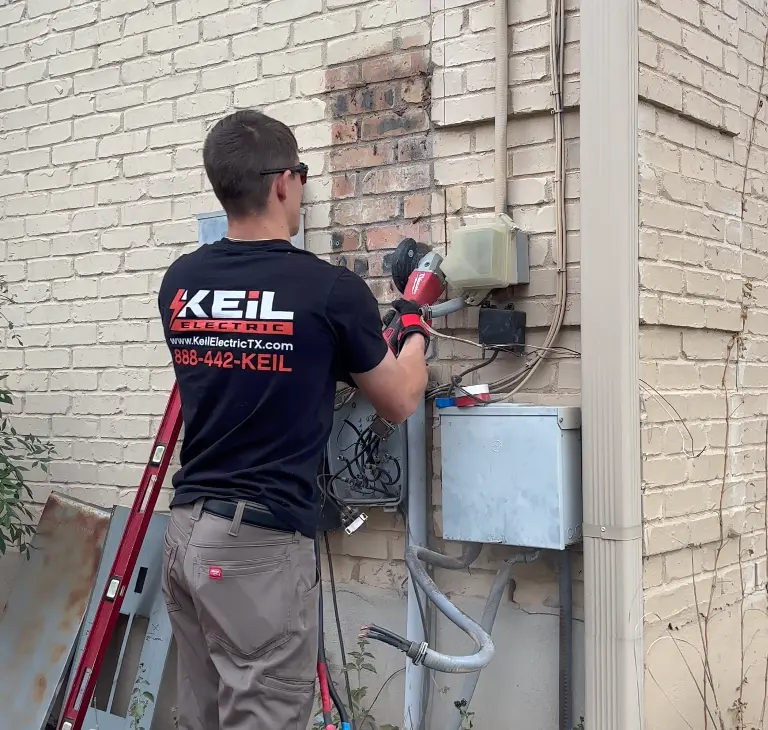
Service mast and meter socket work requires utility coordination because the meter has to be pulled to de-energize the service entrance. We pull the permit, schedule with the utility, do the repair, and have the utility re-energize after inspection.
Service mast repair often runs 4 to 8 hours of on-site work plus utility coordination. Meter socket repair runs similar.
Older equipment scopes: fuses and heat resistors
Older homes still in service sometimes have fuse panels rather than breaker panels. Fuse panels work but the long-term path is replacement with a modern breaker panel. We service fuse panels when needed but recommend replacement during the conversation.
Heat resistor work is typically HVAC-adjacent. Some older heating systems have electric heat resistors that occasionally need replacement. The work involves de-energizing the circuit, replacing the resistor, and verifying proper operation.
What we tell every customer about specialty work
Specialty work has specific code that the homeowner often doesn’t know about. Hot tub bonding requirements surprise many homeowners. EV charger continuous-load sizing affects breaker selection. Smoke detector interconnect requirements affect wiring. We confirm code at scope and explain the requirements before quoting.
Equipment lead times affect calendar. Specialty equipment (hot tub disconnects, dedicated meter sockets, specific detector models) sometimes has lead times. We tell the homeowner the realistic timeline at quote.
Permits are typical for specialty work. The cost is small relative to the work, and the inspection catches conditions before they become issues. We don’t skip permits to save the homeowner a few dollars; the catches are worth it.
Hot tub and pool electrical (NEC 680)
NEC 680 governs electrical work for swimming pools, spas, hot tubs, fountains, and similar bodies of water. The code is specific because the combination of water and electricity creates unique hazards. The major requirements:
- Equipotential bonding grid. A continuous grid of conductors bonded to all metal parts within 5 feet of the pool or spa. The grid prevents a person standing in or near the water from being part of the path of an electrical fault. The bonding grid is buried in the deck or pool surround during construction and tied to the equipment grounding conductor.
- GFCI protection on all 125V circuits in or near the pool/spa area, and on all motor circuits.
- Disconnect within sight of the pool/spa equipment, no closer than 5 feet from the water and no further than the equipment can be reached.
- Specific cord and connector requirements for portable spas (NEC 680.42), often a NEMA 14-50 or hardwired connection per the manufacturer.
- Underwater lighting with low-voltage transformer and specific cord and termination requirements per NEC 680.
Hot tub and spa installs are the most common NEC 680 scope we run. The work coordinates with the spa supplier and the building permit covers both the electrical and (where required) the structural support.
Smoke and CO detector wiring
Smoke detectors and combination smoke/CO detectors are required by NFPA 72 and local code. The NFPA 72 requirements:
- Smoke detectors in every bedroom, outside every sleeping area, and on every level of the home including basements
- Hardwired with 9-volt battery backup, interconnected so all detectors sound when one detects smoke
- Carbon monoxide detection within 10 feet of every sleeping area in homes with attached garages, gas appliances, or fireplaces
- Power source compliance per NEC 760 for circuits powering these life-safety devices
Common scopes:
- New install. Run hardwired interconnected detectors during a remodel or new construction.
- Retrofit interconnect. Older homes with battery-only detectors get hardwired interconnected upgrades, sometimes during a panel upgrade or rewiring scope.
- Wireless interconnect retrofit. Where running new wiring is impractical, wireless-interconnected battery-powered detectors meet code in some AHJs without rewiring.
- End-of-life replacement. Smoke detectors have a 10-year service life. Past that point the sensor degrades and the unit needs replacement regardless of the test button result.
Service mast and meter socket repair
The service mast (overhead service) and meter socket (the meter base) are weather-exposed components that age and damage over decades. Common scopes:
- Storm-damaged mast. Wind damage, falling tree limb, ice loading. The mast bends, the weatherhead pulls loose, or the connection at the utility drop fails. Repair coordinates with the utility for the meter pull.
- Corroded meter socket. Moisture infiltration over years corrodes the meter base contacts. Heat at the meter is a sign. Replacement of the socket is the fix.
- Service mast at end of life. Older galvanized masts can rust through. Replacement is a substantial scope including utility coordination.
- Underground service lateral damage. The underground feeder from a transformer to the meter base. Damage usually requires utility involvement.
All service-entrance work coordinates with the utility for the meter pull. Permits are pulled, inspections are scheduled, and the work is backed by our written warranty.
Dedicated circuits for specialty equipment
Some equipment requires a dedicated circuit, a circuit that serves only that load, sized to the equipment’s specifications, and protected appropriately. Common dedicated-circuit scopes:
- Window AC units. Larger units (10,000+ BTU) often require a dedicated 20A circuit; some need 240V.
- Sump pumps. Dedicated circuit so a basement flood does not trip the breaker on an unrelated load.
- Garage door openers. Often on a shared circuit but can benefit from dedicated.
- Refrigerator / freezer in a garage or detached structure. Dedicated to prevent loss of stored food during another circuit’s tripping.
- Aquariums. Heaters, pumps, and lighting on a single shared circuit can exceed the 80% continuous-load rule. Dedicated circuit handles the combined load with margin.
- Hot tub auxiliary equipment. Pumps, heaters, blowers may need dedicated circuits separate from the main spa circuit.
- Workshop equipment. Table saws, planers, dust collectors, and other shop tools often need 240V dedicated circuits.
- Medical equipment in home settings. Oxygen concentrators, dialysis equipment, and similar may have specific circuit requirements.
Hot tub and spa bonding (the buried code requirement)
One of the most commonly missed code requirements on hot tub installs is the equipotential bonding grid per NEC 680.26. The grid is mandatory but invisible after installation, it is buried in the deck, the concrete pad, or the dirt around the spa. A spa installed without the bonding grid passes a casual inspection but fails a thorough code check.
The bonding grid:
- #8 AWG bare copper conductor
- Encircles the spa within 5 feet of the water
- Bonds to all metal within 5 feet, handrails, decks, the spa frame, the equipment
- Connects to the equipment grounding conductor at the spa equipment
Installation is straightforward during construction but expensive to retrofit if the deck or pad is already in place. We confirm the bonding grid is in place during any spa-related scope.
Other specialty scopes we run
- Electrical heat tape for water-line freeze protection in garages and crawl spaces
- Snow-melt mats and heated walkways (NEC 426)
- Electric fence energizers (low-voltage, but the supply circuit is residential)
- Electric vehicle charger wiring beyond the standard scope (RV park hookups, larger commercial fast chargers)
- Backup sump pump systems with battery backup or alternate-source switching
- Fountain and water-feature electrical per NEC 682 / 680 depending on scope
- Greenhouse and indoor garden electrical with high-load lighting and humidity considerations
For any specialty scope, the work starts with a real understanding of what the equipment requires, what NEC section applies, and what the AHJ requires for permit and inspection. Specialty does not mean improvised.