Commercial electrical work runs on different rules than residential. Project schedules align with the building’s operating window, not the homeowner’s availability. Communication runs through a named contact (general contractor, project manager, facility lead, or property manager) rather than the resident. Code requirements include occupancy classifications and emergency systems that don’t apply to homes. Pricing structures account for hourly schedules, after-hours premiums, and material take-offs that homes don’t need.
both shops handle light commercial. The San Diego location covers commercial work across San Diego County under California license #1109913. The Austin location covers the Austin metro under Texas license #40645. Common scopes include tenant improvements, retail and office service, restaurant electrical, multifamily building service, and ongoing facility maintenance contracts.
This page is the umbrella for commercial work. Specific commercial scopes (panel work, TI buildouts, multifamily) follow the same dispatch and quote process. The first call routes the project to the commercial side rather than residential dispatch.
What commercial scopes do we cover?
Tenant improvements (TIs). Office, retail, and light industrial space buildouts that involve new electrical scope: panels, sub-panels, distribution, lighting, dedicated circuits for tenant equipment. We work with the GC, the architect, and the tenant.
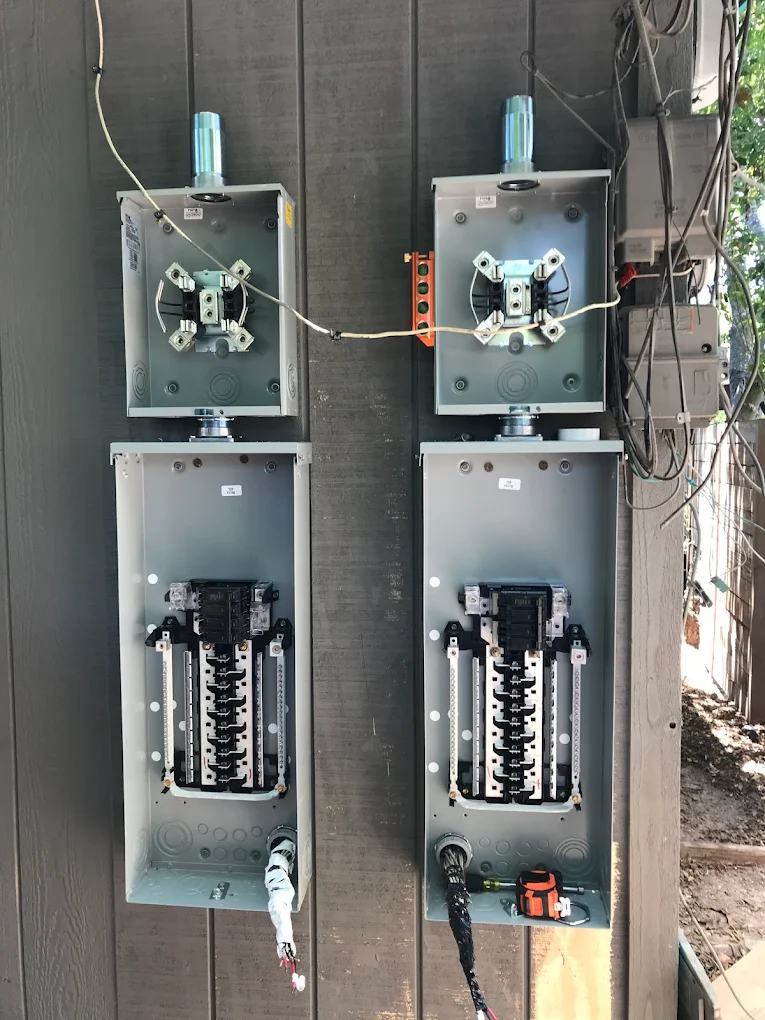
Retail and office service. Existing space that needs changes: new outlets for new equipment, lighting upgrades, panel additions, low-voltage cabling for IT, security system electrical.
Restaurant electrical. Hood vents, equipment circuits, dedicated kitchen panels, GFCI on prep stations. Restaurant work has additional code requirements (NEC 645 for IT equipment in some scopes, NEC 422 for appliance circuits).
Multifamily building service. Common-area electrical, building service entrance, common lighting, parking lot lighting, security system electrical. Unit-level electrical inside multifamily is sometimes commercial scope (when the property manager is the customer) and sometimes residential scope (when the unit owner is the customer).
Property management and facility maintenance. Recurring service contracts for property managers covering routine inspection, repair, and emergency response across a portfolio of properties.
EV charger installations at commercial properties. Multi-port charging stations, parking lot chargers, dedicated commercial circuits with appropriate metering.
How does commercial dispatch work?
Commercial requests come through the named-contact form on each location page. The form routes to the commercial side of the business, not the residential dispatch queue. We assign a project lead who is the single point of contact for the work.
The project lead handles scoping, quoting, scheduling, and coordination with the GC or property manager. Change orders go through the project lead with written documentation. Inspections and final walkthroughs happen with the project lead present.
Code differences for commercial
Commercial occupancy classifications (Group B for office, Group M for mercantile, Group A for assembly, Group R for residential) trigger different code requirements than single-family residential. Emergency lighting per NEC 700, exit signs per NFPA 101, GFCI requirements per occupancy, and panel sizing per occupancy load calculations all matter.
Some commercial spaces have specific code: NEC 517 for healthcare facilities, NEC 518 for places of assembly, NEC 645 for IT equipment rooms, NEC 410.137 for sign and outline lighting. We confirm the applicable code at scope.
Title 24 in California adds energy code requirements: occupancy sensors, dimming controls, daylight harvesting, lighting power density limits. Texas has different energy code requirements at the state level with city-level amendments.
After-hours and off-hours work
Tenant improvement and retail work often runs after hours so the building stays operational during business hours. Restaurant work runs in off-hours so the kitchen can serve service hours. Office work runs on weekends or evenings. We schedule the work to match the building’s operating window and price after-hours work accordingly.
Maintenance contracts and recurring service
Property managers and facility leads often need recurring electrical service: routine inspections, light maintenance, emergency response, and known-issue tracking. We offer maintenance contracts with cadence and scope set per the property’s needs.
Common contract scopes include quarterly panel inspections, annual electrical safety audits, common-area lighting maintenance, parking lot lighting service, and emergency response within a defined service-level window.
What we don’t do on the commercial side
We don’t handle high-voltage utility work (above 600V) or substation-level electrical. We don’t handle industrial process electrical (manufacturing equipment, large-motor controls, PLC programming). We don’t handle the very large commercial buildouts (multi-story office buildings, large-scale developments). For those, we refer to commercial-specialty firms.
We do handle the long tail of light commercial work that fits the residential-to-light-commercial scale: TIs, retail, restaurant, multifamily, property management.
Commercial scope categories
Commercial electrical work covers a different set of code sections, sizing logic, and coordination requirements than residential. The scope categories we run:
Tenant improvements (TI)
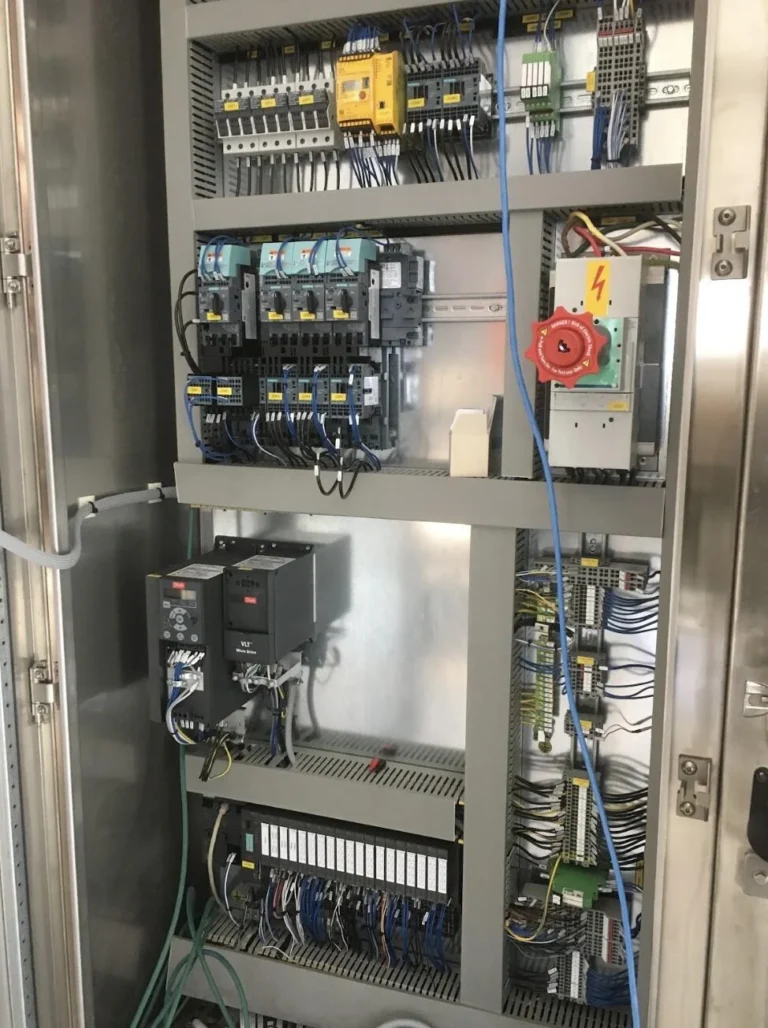
Most common commercial scope. The building owner provides a base service, and tenants subdivide that service for their specific use. TI work covers panel modifications, branch-circuit additions for the tenant’s equipment, lighting per the tenant’s layout, and any specialty circuits the tenant’s business requires (data center loads, kitchen equipment in a restaurant TI, dental or medical equipment in a healthcare TI).
TI scopes work within the existing service capacity and the existing panel infrastructure. Coordination with the building owner is required for any work that affects shared building systems.
Light commercial buildouts
Office buildings under ~10,000 sq ft, retail spaces, small warehouses, professional offices, and similar. Full electrical scope from service entrance through finishes: panel sizing per NEC 220 commercial methods, branch-circuit layout, lighting design per Title 24 (CA) or IECC (TX adoption) energy-code requirements, emergency egress lighting per NEC 700 where occupancy code requires it.
Restaurant and food-service electrical
High electrical density per square foot, refrigeration, cooking equipment, exhaust fans, dish machines, point-of-sale systems. Specific scope considerations: NEC 422 for cooking equipment, NEC 220 demand factors for kitchen loads, dedicated circuits for major appliances, and coordination with kitchen-equipment vendors for specific connection requirements.
Retail electrical
Lighting design (general, accent, display), point-of-sale and back-office circuits, security system circuits, signage circuits per NEC 600. Energy code applies, Title 24 in CA, IECC in TX as adopted, setting lighting power density limits and control requirements.
Service work for existing commercial
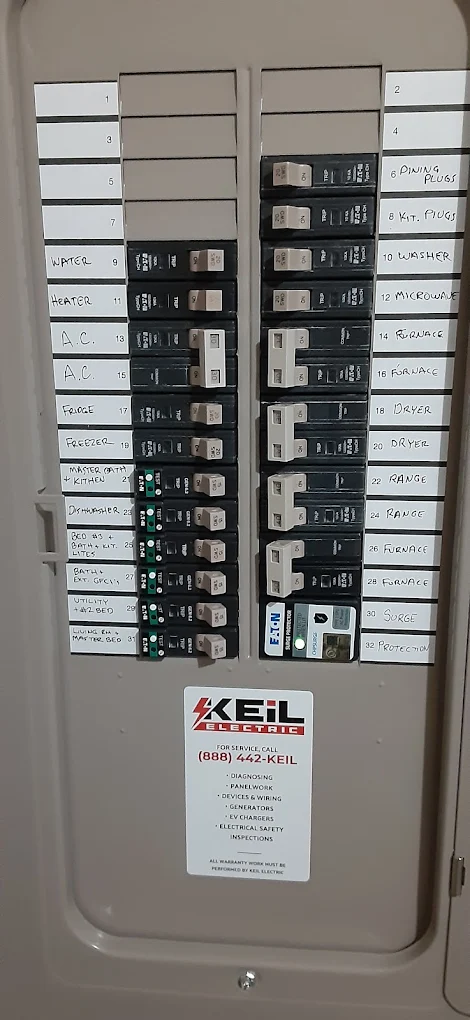
Diagnostic, repair, and small modifications for existing commercial buildings. Common scopes: tripping breakers under load, hot-termination diagnostics, exit sign and emergency lighting maintenance, code corrections from inspection findings, equipment additions or replacements that require new branch circuits.
Code differences from residential
Commercial work runs under different NEC sections than residential. The major differences:
- NEC 220 commercial load calculation methods. Standard Method, Optional Method for some occupancies, and varying demand factors per occupancy type (office vs retail vs restaurant vs warehouse).
- NEC 700 emergency systems. Required where life-safety code mandates backup power for egress lighting, fire alarm, elevators, and other critical systems.
- NEC 701 legally required standby. Required where code mandates backup for systems that are not life-safety but are required to be available.
- NEC 215 feeders. Distinct calculation and protection requirements for feeders between service equipment and downstream panels.
- NEC 230 services. More complex than residential, overhead vs underground services, multiple service drops, service-entrance conductor sizing for commercial loads.
- NEC 408 panel labeling and arc flash. Commercial panels often require arc-flash hazard labels per NFPA 70E in addition to NEC labeling.
- Energy code. Title 24 (California) and IECC (adopted by Texas jurisdictions) set lighting power density limits, occupancy-control requirements, and HVAC efficiency requirements that affect electrical design.
Coordination on commercial scopes
Commercial work usually involves multiple parties:
- Building owner / property manager. Approves any work affecting shared building systems. Provides access to the main service equipment.
- Tenant. Defines the scope for their specific space and signs off on the install.
- Architect / designer. Provides the layout and finishes. Coordinates electrical with mechanical, plumbing, and structural.
- Mechanical engineer (MEP). On larger commercial scopes, the MEP firm produces the electrical plans and calculations. We work to those plans.
- General contractor. On buildouts, the GC coordinates trades on schedule, manages the rough-in and finish phases, and pulls the building permit.
- AHJ. Plan review before permit issuance, inspection at rough-in and final.
- Specialty vendors. Kitchen equipment, dental/medical equipment, data center hardware vendors provide specific connection requirements that affect electrical design.
Service contracts vs project work
Many commercial customers prefer a service relationship for ongoing electrical maintenance, a single contractor who knows the building, has documented panel schedules, and responds to service calls during business hours and after hours. The arrangement typically covers:
- Annual electrical inspection of major equipment (panels, transfer switches, generators)
- Periodic thermal imaging of panels and major terminations to catch hot spots early
- Priority response on service calls during business hours
- After-hours emergency dispatch at agreed rates
- Documentation of any permitted work and inspection sign-offs
For one-time scopes, a TI buildout, a panel addition, a lighting retrofit, the work is project-priced with fixed scope and fixed cost. The two arrangements coexist; many of our commercial customers have both an active project on the books and an ongoing service relationship.
Industries we work with
The brand has earned commercial accounts across multiple industries, banking, retail, hospitality, warehouse, and others. Each has its own scope considerations: banks have specific security-system integration needs, retail has signage and display lighting requirements, hospitality has guest-room and back-of-house separation, warehouse has high-bay lighting and material-handling equipment. Our commercial scopes are coordinated with the customer’s facilities team or property manager to match the specific requirements of the operation.