Electrical inspections produce written reports about electrical system condition. Pre-purchase home inspections happen during real estate transactions. Safety inspections happen after storms, surges, or unexplained electrical events. Code-correction inspections happen after a city or utility issues a deficiency report. Insurance inspections happen when an insurer requires verification of electrical condition (especially for older homes or homes with knob-and-tube or aluminum branch wiring).
Each inspection has different scope and produces different documentation. Pre-purchase inspections are negotiation tools for buyers. Safety inspections give homeowners actionable information about whether their system is safe. Code-correction inspections produce the punch list that brings a system back into compliance. Insurance inspections produce the documentation the insurer needs to maintain coverage.
both shops are licensed for electrical inspections in their respective markets. The reports are written by licensed electricians who can also do the correction work, which means the homeowner has a single point of contact from inspection through repair.
What does a whole-home electrical inspection cover?
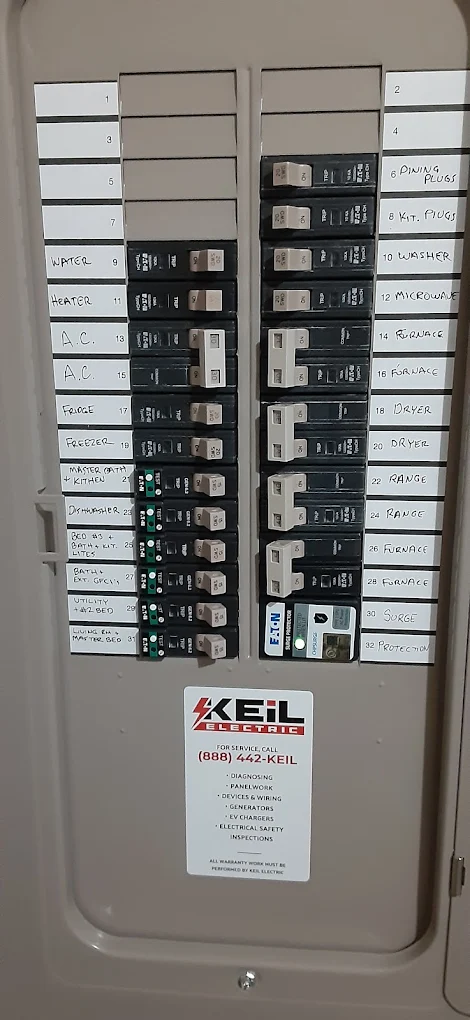
The standard whole-home electrical inspection covers seven areas. Service entrance and meter (visible condition, mast condition, weather-tightness). Main panel (cover off, bus condition, breaker condition, lug torque, labeling). Grounding electrode system (rod or rods, water pipe bond, supplementary electrodes per NEC 250). Branch circuit sampling (representative outlets in each room tested for proper wiring with a circuit analyzer). GFCI and AFCI protection verification (test every required GFCI, document AFCI presence). Smoke and CO detector function (battery and hardwired). Visible interior wiring inspection (where accessible: attic, basement, crawl space).
The inspector documents conditions with photos. Findings are categorized by priority: life-safety items, code-compliance items, and recommended improvements. The written report goes to the homeowner with each finding tied to a specific photo and a recommended scope of work.
How does a pre-purchase inspection differ?
Pre-purchase inspections are typically scheduled during the option period of a real estate transaction. The buyer hires the inspection. The report becomes part of the negotiation about repair credits or scope.
The pre-purchase inspector documents conditions without scoping repair work directly. The written report is structured for negotiation: clear photo evidence, code-citation references where applicable, and a description of what each finding means for the buyer.
If the buyer wants a repair quote based on the inspection, that’s a separate engagement. Some buyers ask the inspector to also quote the corrections; others use the report to negotiate with the seller and have the seller’s contractor handle the work.
Code-correction work after a deficiency report
City building departments and utilities issue deficiency reports for various reasons. A new permit application reveals existing non-compliant wiring. An insurance inspection finds aluminum branch wiring that needs remediation. A utility meter visit finds damaged service equipment. A home sale triggers a city-required electrical certification.
The correction process starts with reading the report. We confirm what the AHJ is asking for, scope the corrections, pull the correction permit if separate from the original work, do the corrections, and schedule the re-inspection.
Common code-correction scopes: aluminum branch wiring remediation (COPALUM crimps, AlumiConn connectors, or replacement with copper), grounding electrode upgrade to current code (typically two ground rods per NEC 250.53), GFCI installation in newly-required locations, AFCI installation per NEC 210.12, replacement of recall panels (Federal Pacific, Zinsco, Challenger), repair or replacement of damaged service equipment.
Post-storm and post-surge safety inspections
Storms cause specific kinds of electrical damage. Lightning strikes damage service entrance equipment, ground fault interrupters, and sensitive electronics. Wind damage tears service masts and pulls service drops. Flooding submerges panels and outlets. Each scenario has a specific inspection scope.
Post-strike inspections look for: surge damage to GFCI and AFCI breakers (which often need replacement after a near strike), damage to the service entrance conductors and meter socket, panel bus condition, and heat damage at terminations along the circuits where the surge traveled.
Post-flood inspections look for: water-damaged outlets and switches in affected areas, panel exposure to water, damage to wiring where insulation has degraded from water contact, and corrosion at terminations and ground rods.
The inspection report calls out items that should be replaced before the system is energized again. Some items are marginal but acceptable for continued service with monitoring. Some items are clear replacements. The homeowner gets the priority breakdown in writing.
Insurance inspections for older homes
Insurers sometimes require electrical inspections for homes over a certain age, homes with knob-and-tube, or homes with aluminum branch wiring. The inspection produces documentation the insurer reviews to determine coverage and premium.
The insurance inspection scope follows the insurer’s required form. Common requirements: presence of GFCI protection in wet locations, presence of AFCI protection per current adoption, condition of the panel (no recall panels, no scorched bus, no double-tapped breakers), grounding electrode system condition, and knob-and-tube or aluminum status with remediation history.
How do I schedule an inspection?
The first call captures what kind of inspection you need (pre-purchase, post-storm, code-correction, insurance, general safety), the property type, and the timeline. Pre-purchase inspections often need to fit into a specific real estate option period, so we schedule them with priority.
The inspection visit typically runs 90 minutes to 3 hours depending on home size and conditions. The written report follows within 1 to 3 business days.
If the inspection reveals work to be done and the homeowner wants us to do it, we provide a written quote and schedule the work separately.
Pre-purchase inspection scope
Pre-purchase electrical inspections are the most common reason we get called for inspection work. The buyer (or buyer’s agent) has had a general home inspection and wants a licensed electrician to dig deeper on flagged items or on the electrical system as a whole.
The pre-purchase scope typically includes:
- Panel inspection. Brand identification (looking for Federal Pacific, Zinsco, Challenger and other documented-issue brands), bus bar condition, breaker condition, terminations, working clearance per NEC 110.26, and labels per NEC 408.
- Service entrance. Mast or service lateral, weatherhead (overhead service), meter base, main disconnect, and grounding electrode system per NEC 250.
- Branch circuit sample. A representative sample of receptacles and switches throughout the home, checking for correct wiring, GFCI in code-required locations per NEC 210.8, AFCI presence on circuits where current code requires it per NEC 210.12, and signs of amateur modifications.
- Wiring identification. What type of wiring is in the home, knob-and-tube, aluminum branch (1965-1973), modern NM-B copper, or a mix. Includes attic, basement, and accessible junction-box visual inspection where access permits.
- Code-correction needs. Items that the seller would need to correct, or that the buyer should plan for after close. Usually quantified with rough scope and price-range estimates.
The output is a written report the buyer or buyer’s agent can use during sale negotiations. We do not perform repairs as part of the inspection; if the buyer engages us for the corrections, that is a separate scope after close.
What inspectors typically find
The most common findings on residential pre-purchase inspections:
- Federal Pacific or Zinsco panels (a flagged item that affects insurance and resale)
- Aluminum branch wiring on circuits in homes built 1965-1973
- Knob-and-tube wiring in older homes, particularly with insulation packed around it
- Missing GFCI in code-required locations per NEC 210.8 (older homes pre-dating expanded GFCI requirements)
- Three-prong outlets on two-wire (ungrounded) circuits, a code violation that misleads about grounding
- Reverse-polarity outlets (hot and neutral swapped at the device)
- Open ground or open neutral conditions
- Improperly bonded subpanels (neutral and ground bonded at the subpanel, which is a code violation)
- Hidden junction-box splices (NEC 314 violations)
- Amateur modifications visible at panels, junctions, or device terminations
- Service mast issues, corroded hardware, weatherhead damage, undersized conductors
- Working clearance violations per NEC 110.26 (panels installed in closets without 36-inch clearance, etc.)
Code-correction work
Once the inspection report is in hand and the buyer has closed (or the seller has agreed to correct items pre-close), the corrections become a project scope. The work follows the report:
- Replace identified items (panels, fixtures, devices)
- Add code-required protection (GFCI, AFCI) where missing
- Repair grounding electrode system per NEC 250 if findings warrant
- Address improperly bonded subpanels
- Resolve hidden junction-box splices by adding accessible boxes per NEC 314
- Replace damaged service entrance hardware
Each correction is scoped, priced, and pulled under permit where required. The work follows the same Keil Electric process: written scope, licensed electrician walks the job, permit pulled, inspection scheduled, written warranty on the install.
Permit history research
For homes where the inspection finds work of unclear age or origin, permit history research can fill in gaps. AHJs maintain permit records for past work; pulling the permit history on a property reveals what was inspected and signed off versus what was done without permit.
Permit-history gaps matter because:
- Unpermitted work has not been inspected. Quality is unknown.
- Unpermitted work is not in code-compliance records. The next inspection or remodel can require bringing the work to current code as a condition of the new permit.
- Insurance and sale disclosure sometimes require disclosure of unpermitted work.
We can pull permit history on a property as part of inspection scope when relevant. The research itself is straightforward; the value is in interpreting what the permits do or do not cover.
Inspection for insurance
Some insurance carriers require electrical inspection as a condition of issuing or renewing coverage on older homes. The carrier defines the inspection scope; we work to that scope and produce the documentation the carrier requests. Common carrier requirements:
- Identification of panel brand (Federal Pacific, Zinsco flagged)
- Identification of wiring type (knob-and-tube, aluminum branch flagged)
- GFCI presence in code-required locations
- Service amperage (some carriers underwrite differently for 60A or 100A vs 200A service)
- Documented age of major equipment (panel, service entrance)
The carrier’s requirements drive the scope. Once corrections are made, the inspection re-runs to verify completion, and the documentation goes to the carrier for coverage approval.