
San Diego service
EV charger installation in San Diego, CA
Master-licensed EV charger installation from our San Diego shop. Real person on the line, master on every job.
LOCAL TEAM · SAN DIEGO
8733 Magnolia Ave #105, Santee, CA 92071
(619) 771-1114
Mon-Fri 8:00 am - 8:00 pm · Sat-Sun by appointment
CA License 1109913
from 278 Google reviews
Direct answer
Keil Electric San Diego handles EV charger installation for homes and businesses across San Diego County. EV charging station installation at Keil Electric covers Level 1, Level 2, and dedicated-circuit installs for home charging.
Response time
San Diego: Most days we're already in the area. Same-day appointments when capacity allows. After-hours emergencies dispatched when a licensed electrician is available, a real person at the local shop answers and tells you the ETA on the call.
Call now
01
- WHAT WE LOOK AT
What we look at on a job like this
01
Panel and PV interconnect review first
We start every San Diego install by photographing the panel and confirming any existing solar PV interconnect.
02
Coastal hardware where applicable
Outdoor charger installs in coastal communities use stainless or weather-resistant hardware to handle salt-air exposure.
03
NEC 625.41 continuous-load sizing
Branch circuit sized for 125% of charger continuous load per NEC 625.41 plus any CEC amendments.
04
AHJ-specific permit work
Each city has its own permit process. We pull the right permit for the specific AHJ.
05
Solar contractor coordination
When the panel has existing PV, we coordinate with the solar contractor before any panel modification.
02
- WORK FROM SAN DIEGO
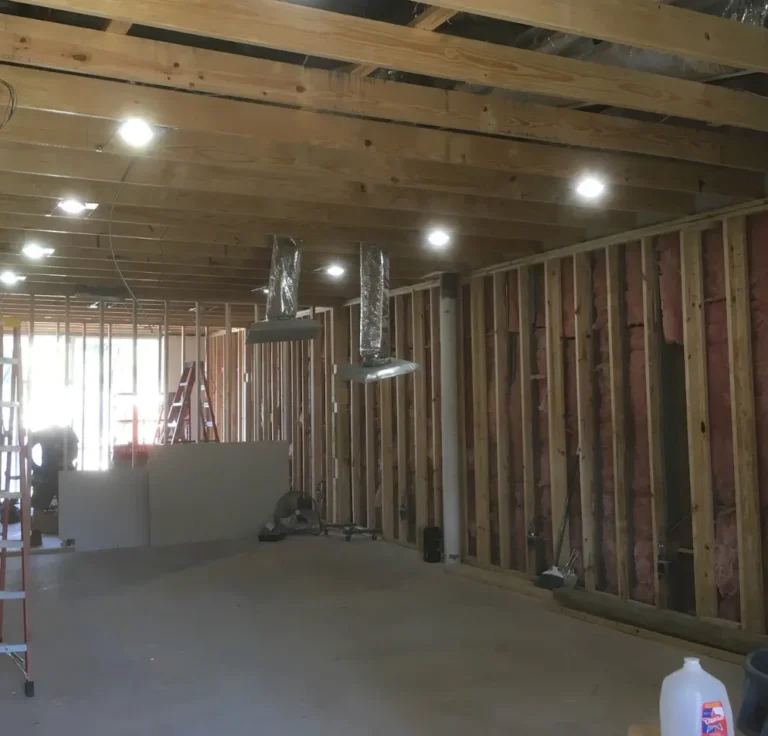
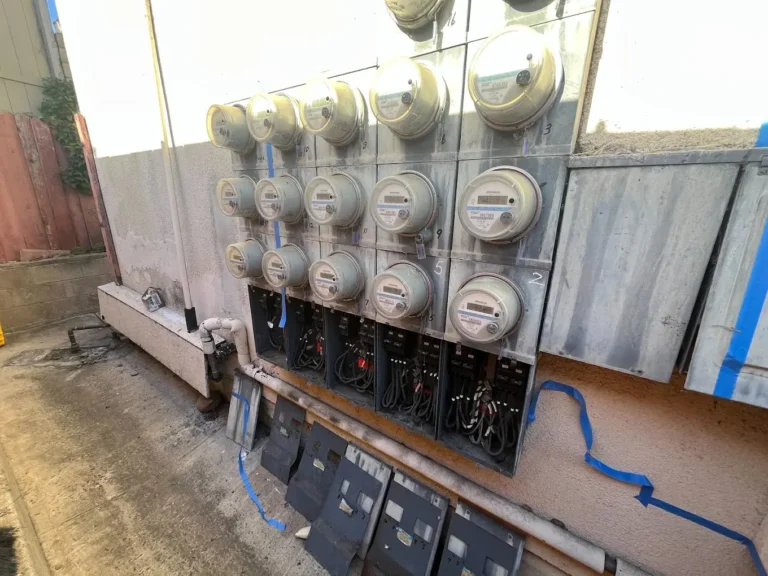
Recent work from the San Diego team.
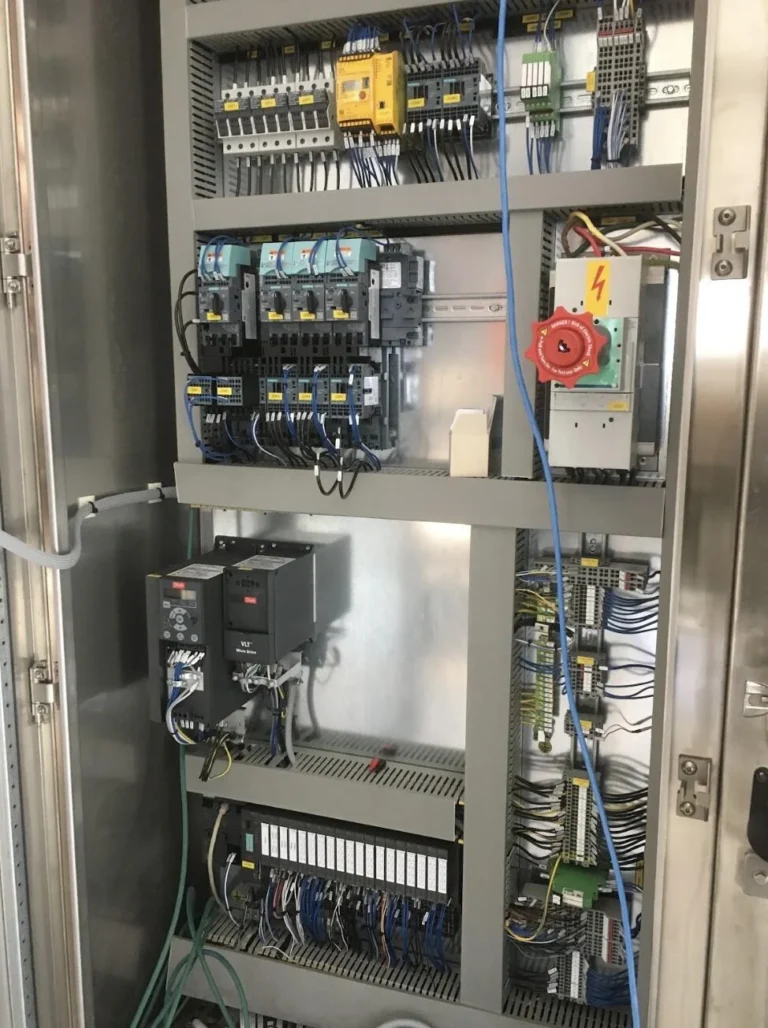
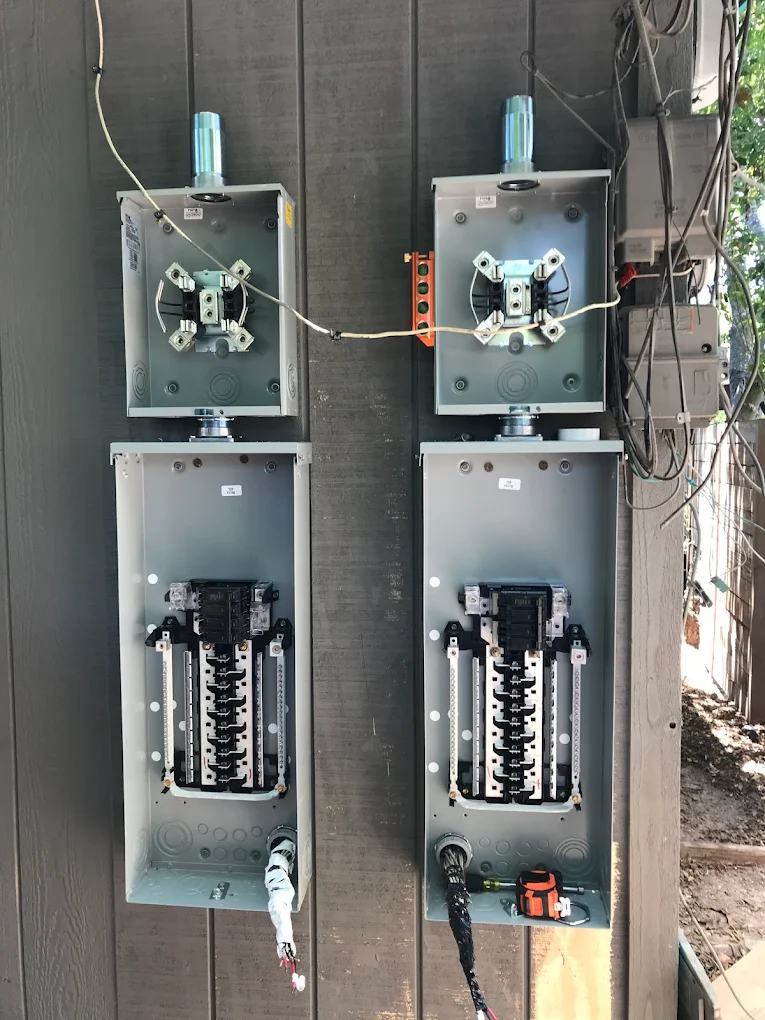
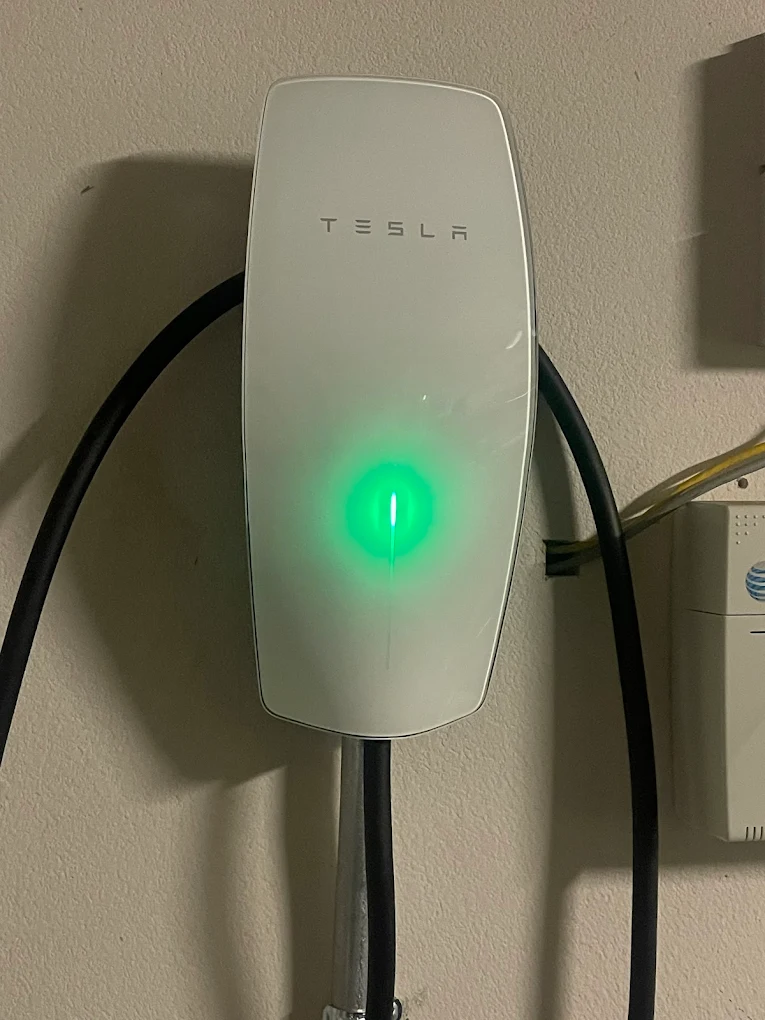
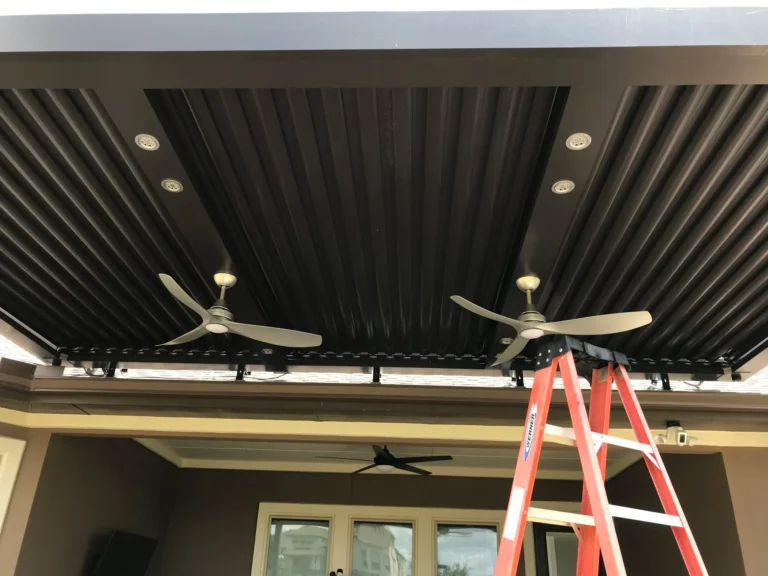
Real installs and service calls across our San Diego coverage area.
Permits
Permits and inspections
Not every job requires a permit. When the local AHJ requires one, we pull it, schedule the inspection, and stay with the job until it passes. No paperwork on you.
Warranty
What's covered
5-year written warranty on EV chargers and motorized fans. Parts and labor. Stays with the home and transfers to the next owner.
03
- CA SPECIFIC · SAN DIEGO COUNTY
What is different about EV charger installation in California.
Some of what we do for EV charger installation is shaped by the codes and conditions specific to California. Here is what tends to differ versus other states.
California code stack
California layers state amendments on top of the National Electrical Code through the California Electrical Code, plus the Title 24 energy code in Part 6 and additional requirements in other parts. The practical effect for EV charger installation is that the rule set is denser than NEC alone. Energy compliance, fixture efficacy, lighting controls in some occupancy types, and electrification readiness all show up at inspection. The cities and unincorporated areas across San Diego County each enforce the same state code stack but have their own permitting offices and inspection scheduling. We track current cycles for the AHJs across our coverage area, so the scope we write for Coronado, La Jolla, El Cajon, or any of the other cities we serve reflects the rules that AHJ is actually enforcing right now.
Marine-air and corrosion
Coastal San Diego County sits in marine air for most of the year, and chloride-laden moisture is harder on metal hardware than most homeowners realize. Standard zinc-plated parts that hold up indefinitely inland will pit and rust visibly within a few years close to the coast. We default to corrosion-rated boxes, fittings, and fixtures on exterior runs in the coastal zone, and we look for early-stage pitting on existing exterior installations when we are walking a job. That is the difference between a fixture that lasts 20 years and one that needs replacement at 7. Small upgrade at install, big difference over the life of the home.
Seismic and electrification
Seismic bracing on panels, generators, and large equipment is part of how we install in San Diego. Equipment that is structurally anchored stays connected through the kind of routine shaking that cracks unbraced installs. Separately, the state push toward home electrification is real on the ground here: more heat-pump conversions, more EV chargers per household, more battery-ready service planning. We size service capacity with the next-decade load in mind when the homeowner is open to it, so the panel we install for EV charger installation today is not the bottleneck on the next upgrade.
04
- COVERAGE FROM SAN DIEGO
Cities where we run EV charger installation.
We dispatch EV charger installation across the San Diego area from our shop. Pick your city for the local page, or "See all cities" for the full coverage list.
05
- WHO TO HIRE
Why hiring a licensed electrician matters.
For EV charger installation, here's the honest comparison. We'd tell you the same thing if we weren't trying to win the job.
Keil Electric
A licensed electrician
Licensed electrician walks every job. Veteran-owned, family-run.
Permits pulled and inspections coordinated when required by the AHJ
5/10-year + lifetime warranty in writing. Parts and labor. Transfers with the home.
Fully insured + workers' comp on every crew
The price you sign is the price you pay
A handyman
Unlicensed for electrical
No state electrical license. Can do simple swaps but not panel work, rewires, or service upgrades.
No permits. Work won't pass inspection if the city audits it later.
No structured warranty. "Call me if something breaks" isn't enforceable.
If something they did causes a fire, your homeowner's insurance can deny the claim.
Cash discount may show up on the invoice.
DIY
Doing it yourself
Cheap, but only if everything goes right. Most electrical work involves load calc, code, and permitting.
A failed inspection means redoing the work. Selling the home later, the buyer's inspector flags it.
No warranty if something fails. Replacement is on you.
Live wiring is a real safety hazard. Most fatal home electrical accidents are DIY.
If you know what you're doing, fine. If you don't, call us first.
EV charger installation in San Diego County brings together two market realities. First, EV adoption has been heavy across the county for over a decade, especially in coastal and inland-suburban communities. Second, a high percentage of San Diego homes have rooftop solar PV (often paired with battery storage), which adds a coordination layer to most charger installs.
Solar PV interconnect coordination
About every other panel-related project in established San Diego neighborhoods involves an existing solar PV interconnect. The PV system’s point of connection at the panel affects available breaker space, the load calculation, and sometimes the install path. We confirm the existing PV setup at the site visit, photograph the breaker layout, and coordinate with the solar contractor when the install path requires changes to the PV side.
Coastal vs inland install patterns
Coastal communities (Coronado, La Jolla, Del Mar, Imperial Beach) see salt-air corrosion at outdoor terminations and meter sockets. Outdoor charger installs need stainless or weather-resistant hardware and more careful inspection of existing service entrance condition. Inland and east county installs (El Cajon, La Mesa, Poway, Ramona) don’t have the salt-air factor but often have smaller existing service (60-amp or 100-amp) that needs upgrading to support a charger circuit.
Title 24 and CEC adoption
San Diego County uses the California Electrical Code, which adopts the NEC with state amendments. Charger installs follow NEC 625.41 (continuous-load sizing at 125%) and are subject to local AHJ amendments. Some cities have adopted EV-readiness requirements for new construction. We confirm the AHJ-adopted requirements at quote.
Permit timing varies by city
Unincorporated areas go through County of San Diego Building. Incorporated cities (San Diego, Chula Vista, Escondido, El Cajon, La Mesa, Coronado, Poway, etc.) each have their own building department with their own turnaround. Most charger installs in San Diego County run permit-and-inspection within 1 to 3 weeks. We tell the homeowner the realistic timeline at quote.
Common questions for EV charger installation in San Diego, CA
What size EV charger should I install?
Most homeowners install a 40A or 48A Level 2 charger, which gives 25-35 miles of range per hour. The right size depends on the vehicle, daily driving distance, and panel capacity. We size on the first call after asking about your driving and electrical service.
Do I need a dedicated circuit for my EV charger?
Yes. Every Level 2 EV charger requires its own dedicated circuit sized to the charger's amperage. We pull a new circuit from the panel to the charger location and install the breaker.
Can my existing panel handle an EV charger?
Often yes for 100A panels with available capacity, almost always yes for 200A. We run a load calculation that accounts for AC, water heater, and other major loads before confirming. If the panel cannot support the charger, we discuss an upgrade as a separate scope.
How long does EV charger installation take?
A typical home install runs 2-4 hours when the panel and run are straightforward. Longer runs, panel upgrades, or attic/crawl space routing extend the time and we confirm the timeline in the written quote.
Plug-in or hardwired - which is better?
Plug-in (NEMA 14-50) is more flexible and lets you take the charger when you move. Hardwired allows higher amperage on the same circuit and is required for some commercial installs. We confirm which path matches your charger and your goals.
Do you install Tesla Wall Connector?
Yes. We install the Tesla Wall Connector on dedicated 240V circuits sized to the breaker rating you choose (32A, 40A, 48A, or 60A on the third-generation unit). The Wall Connector is the cleanest Tesla install option for daily charging.
Do you install ChargePoint Home Flex, JuiceBox, or Wallbox?
Yes. ChargePoint Home Flex, JuiceBox 40, Wallbox Pulsar Plus, and Emporia Level 2 chargers are all in our standard install list. Owner-supplied units from any other major brand are fine too.
Can I just use a NEMA 14-50 outlet to charge?
Yes for portable chargers and Tesla Mobile Connector. NEMA 14-50 receptacles now require GFCI per recent NEC cycles, which can cause nuisance trips on some chargers. For permanent installs, hardwiring usually gives better reliability.
How much does an EV charger install cost?
Typical installs range based on panel capacity, distance from panel to charger location, and equipment selection. The price is in writing before any work starts. About a third of the homes we walk need a panel upgrade before a Level 2 install can happen safely.
06
- REQUEST
Need EV charger installation in San Diego?
Tell us about the project. A licensed San Diego licensed electrician walks the job in person and writes a real scope, backed by our written warranty.
Or call us direct
(619) 771-1114