
Austin service
Surge protection and grounding in Austin, TX
Licensed surge protection and grounding from our Austin shop. Real person on the line, licensed electrician on every job.
LOCAL TEAM · AUSTIN
1511 Brandi Ln Unit D, Round Rock, TX 78681
(888) 442-5345
Mon-Fri 8:00 am - 8:00 pm · Sat-Sun by appointment
TX License 40645
from 148 Google reviews
Direct answer
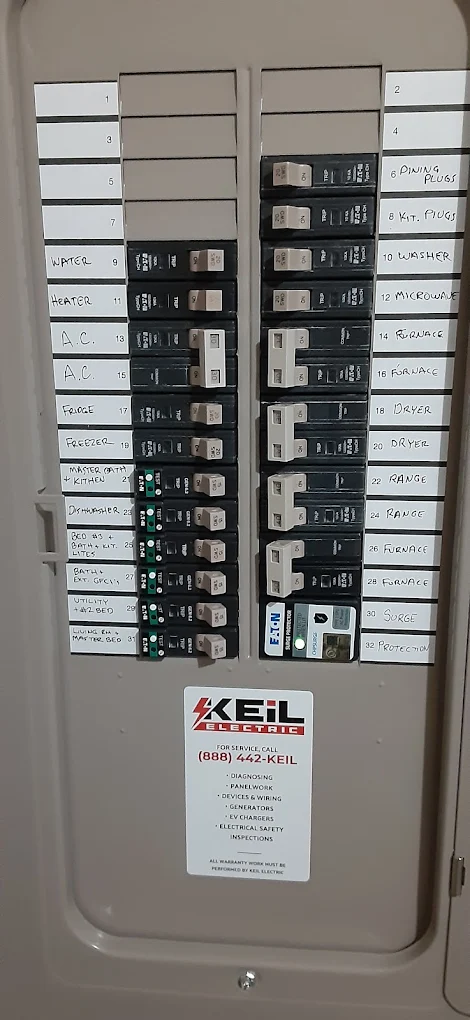
Keil Electric Austin handles surge protection and grounding for homes and businesses across the Austin metro. Surge protection and grounding at Keil Electric covers whole-house surge protector installation at the panel, individual circuit surge protection for sensitive equipment, and ground wire installation or correction where the.
Response time
Austin: Most days we're already in the area. Same-day appointments when capacity allows. After-hours emergencies dispatched when a licensed electrician is available, a real person at the local shop answers and tells you the ETA on the call.
Call now
01
- WHAT WE LOOK AT
What we look at on a job like this
01
Whole-house SPD as default
Most panel work includes whole-house surge protection in this market.
02
Layered surge protection for electronics
Whole-house plus point-of-use at sensitive equipment.
03
Ground impedance testing
Single-rod testing per NEC 250.53(A)(2); supplementary rods when above 25 ohms.
04
Bonding correction per NEC 250.104
Water and gas piping bonding verified and corrected where missing.
02
- WORK FROM AUSTIN
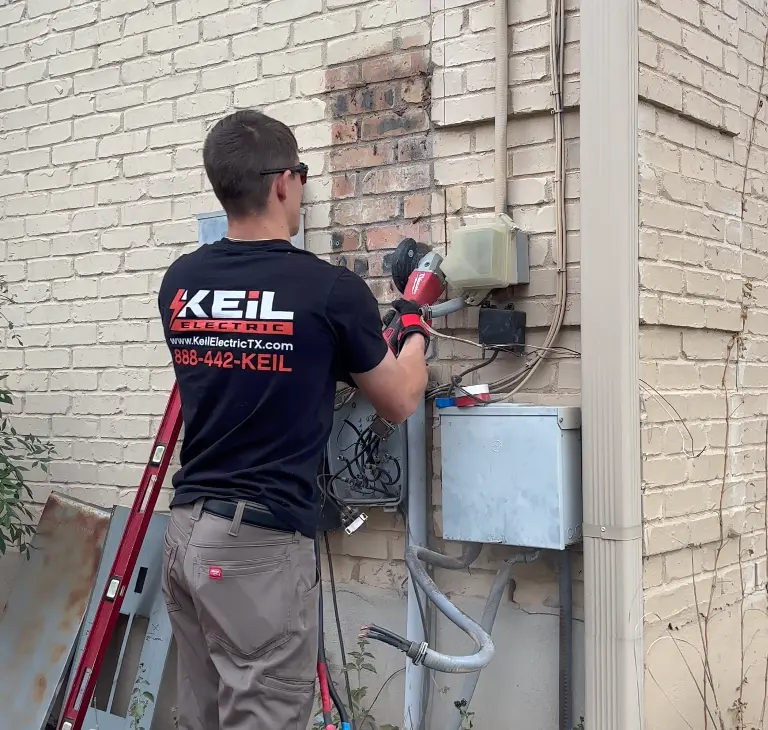
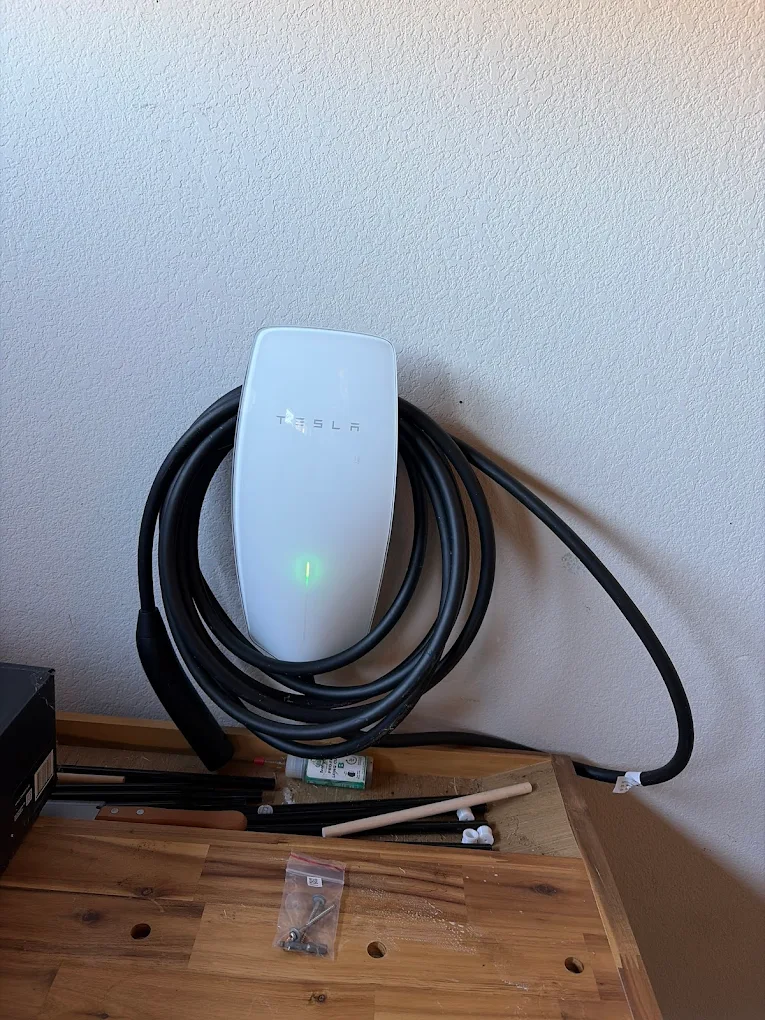
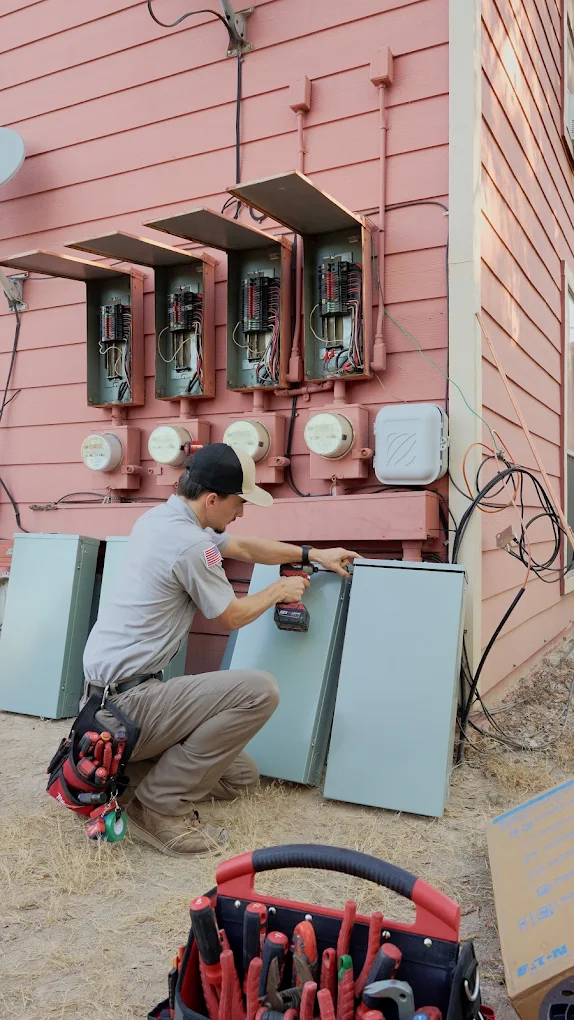
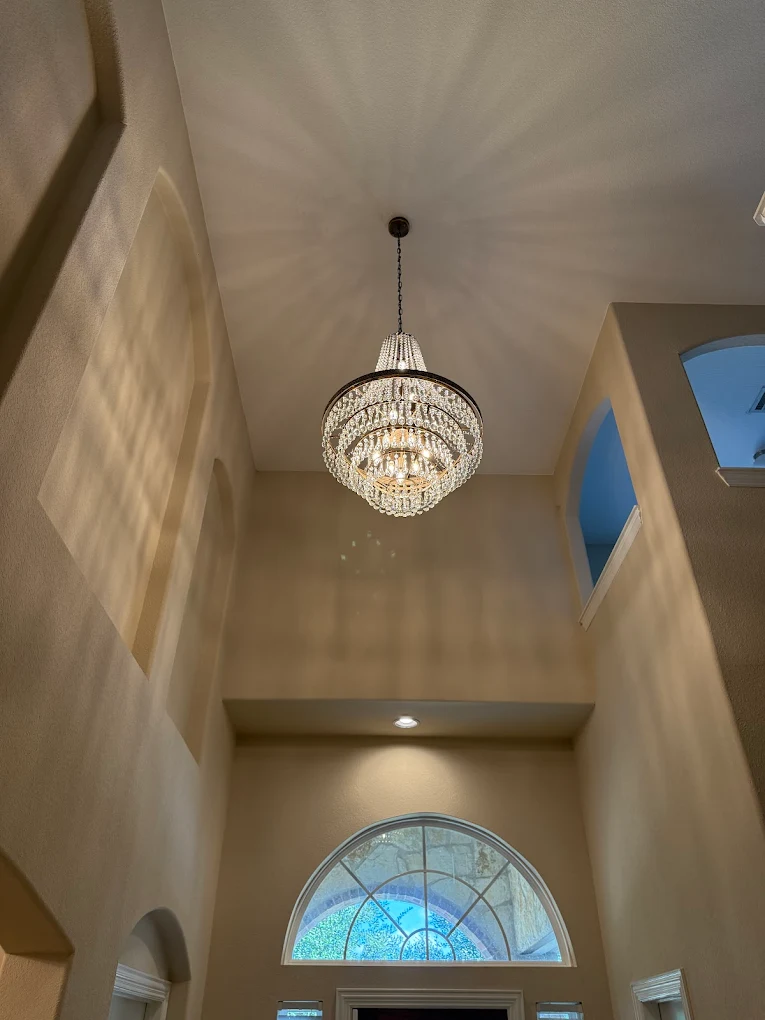
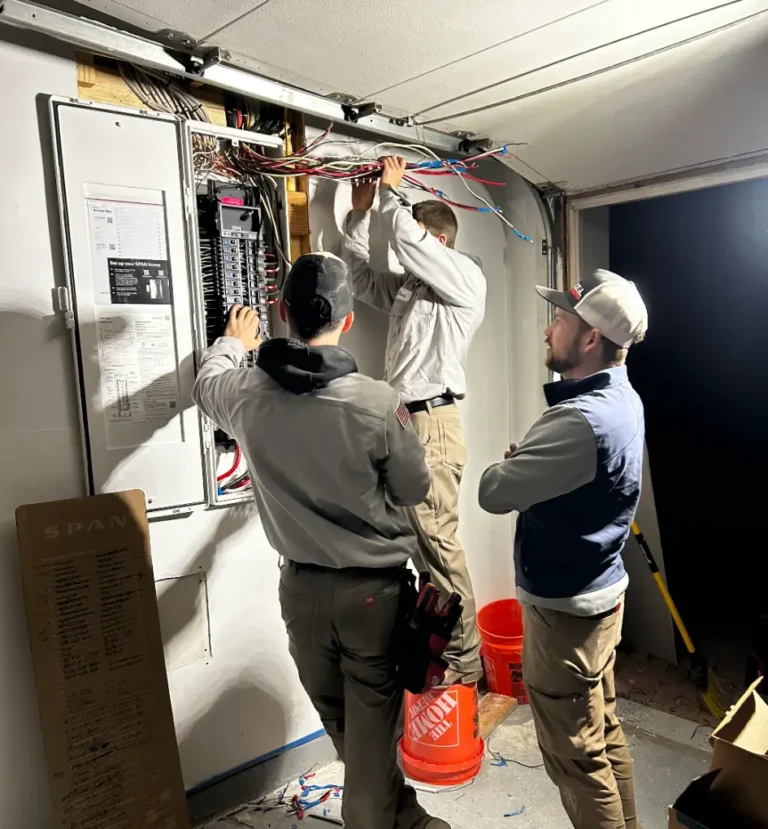
Recent work from the Austin team.
Real installs and service calls across our Austin coverage area.
Permits
Permits and inspections
Not every job requires a permit. When the local AHJ requires one, we pull it, schedule the inspection, and stay with the job until it passes. No paperwork on you.
Warranty
What's covered
Lifetime warranty on surge protection and grounding systems. Parts and labor. Stays with the home and transfers to the next owner.
03
- TX SPECIFIC · AUSTIN METRO
What is different about surge protection and grounding in Texas.
Some of what we do for surge protection and grounding is shaped by the codes and conditions specific to Texas. Here is what tends to differ versus other states.
Code adoption in Texas
Texas adopts the National Electrical Code at the state level through the Texas Department of Licensing and Regulation, with most cities in the Austin metro adopting the most recent NEC cycle within a year or two of publication. Round Rock, Cedar Park, Pflugerville, and the other cities we cover each maintain their own permitting offices with slightly different inspection scheduling and form workflows. We track which cycle each AHJ in our coverage area is currently enforcing, so the scope we write for a job in Round Rock is current to that city, not just current to "Texas." When a project crosses jurisdictions or sits in unincorporated county, we route the permit through the correct authority and tell you upfront which inspection cadence applies.
Hot-climate considerations
Summers across the Austin metro run long and hot, and that affects surge protection and grounding in ways that are easy to underestimate. Panels mounted on west-facing exterior walls run hotter all afternoon. Attic-mounted equipment derates per code because ambient attic temperatures regularly clear 130°F. AC compressors pull near-rated current for hours at a stretch through July and August, which puts more thermal cycling on terminations than the same equipment would see in a milder climate. We size conductors and breakers with that summer load profile in mind, not just the nameplate minimum. On older homes we look closely at terminations that may have loosened from years of heat cycling, those are a common cause of intermittent issues that get misdiagnosed elsewhere.
Severe weather and storm response
The metro sees thunderstorm hail, the occasional derecho, and the post-storm spike in generator and surge-protection demand that comes with each event. We keep enough surge-protection inventory at the shop to swap out a damaged whole-home unit same-day after a strike, and we know which generator and transfer-switch SKUs are realistic to source quickly when the supply chain tightens after a regional event. After the 2021 winter storm we also got a lot more careful about which loads customers actually need on backup, versus which loads end up on the generator only because nobody asked the question at install time.
04
- COVERAGE FROM AUSTIN
Cities where we run surge protection and grounding.
We dispatch surge protection and grounding across the Austin area from our shop. Pick your city for the local page, or "See all cities" for the full coverage list.
05
- WHO TO HIRE
Why hiring a licensed electrician matters.
For surge protection and grounding, here's the honest comparison. We'd tell you the same thing if we weren't trying to win the job.
Keil Electric
A licensed electrician
Licensed electrician walks every job. Veteran-owned, family-run.
Permits pulled and inspections coordinated when required by the AHJ
5/10-year + lifetime warranty in writing. Parts and labor. Transfers with the home.
Fully insured + workers' comp on every crew
The price you sign is the price you pay
A handyman
Unlicensed for electrical
No state electrical license. Can do simple swaps but not panel work, rewires, or service upgrades.
No permits. Work won't pass inspection if the city audits it later.
No structured warranty. "Call me if something breaks" isn't enforceable.
If something they did causes a fire, your homeowner's insurance can deny the claim.
Cash discount may show up on the invoice.
DIY
Doing it yourself
Cheap, but only if everything goes right. Most electrical work involves load calc, code, and permitting.
A failed inspection means redoing the work. Selling the home later, the buyer's inspector flags it.
No warranty if something fails. Replacement is on you.
Live wiring is a real safety hazard. Most fatal home electrical accidents are DIY.
If you know what you're doing, fine. If you don't, call us first.
Surge protection and grounding work in the Austin metro is a much higher-volume scope than in milder markets. Lightning frequency, ERCOT grid switching events, and severe-weather surge patterns make whole-house surge protection a near-default recommendation for any panel work.
Whole-house SPD as default
Most panel upgrades, EV charger installs, and generator installs in this market include a whole-house surge protector at the panel. The investment is small relative to the surge environment and the cost of replacing damaged equipment.
Layered surge protection for sensitive equipment
Whole-house plus point-of-use protection at server racks, home theater, networked equipment, and HVAC controls is standard for homes with significant electronics. We size the layered approach during the scoping conversation.
Grounding electrode upgrades
Pre-1990 homes often have a single ground rod. Texas soil conditions vary widely (clay in some areas, rocky or sandy in others) and ground impedance can be high. We measure with clamp-on testers and recommend supplementary rods when single-rod testing exceeds 25 ohms per NEC 250.53(A)(2).
NFPA 780 lightning protection considerations
Lightning protection systems (air terminals, down conductors, earthing) are a separate scope. For most homeowners, layered surge protection at the panel and at sensitive equipment is the practical approach. NFPA 780 systems are appropriate for taller structures, exposed Hill Country properties, or properties with significant lightning history.
06
- FINANCING · WISETACK PARTNER
Spread the cost over time.
Pre-approval through Wisetack takes under 3 minutes. Soft credit check, no impact to your score.
- 0% APR for 3, 6, or 12 months (qualifying credit)
- 2–10 year low-interest plans for larger projects
- Soft credit check, takes less than 3 minutes
Financing through our partner Wisetack. Loan terms, APR, and approval subject to underwriting. Not all applicants qualify.
Check your rate
Opens Wisetack in a new tab. Texas customers only.
Common questions for Surge protection and grounding in Austin, TX
Do I need a whole-house surge protector if I have point-of-use surge strips?
Whole-house and point-of-use protection are layered: the panel-mounted unit handles large surges (lightning, utility events), and point-of-use strips handle smaller surges and add a second layer. Most homes benefit from both.
How does a whole-house surge protector get installed?
It mounts at the main panel and ties into the bus and ground. Installation typically takes 1-2 hours and includes verifying the panel's ground bond and the surge unit's status indicator.
When does grounding need to be corrected?
Common reasons: an older home with no ground rod or a single rod where two are now required, a missing bond between the panel and the water service, or an inspection report flagging a non-compliant ground.
How long do surge protectors last?
A typical whole-house unit lasts 5-10 years depending on the local surge environment. Most units have an LED indicator that shows whether the protection is still active.
Does homeowners insurance cover surge damage?
Coverage depends on the policy and the cause of the surge. Whole-house surge protection is one of the simpler upgrades that reduces both equipment loss and the chance of needing a claim.
07
- REQUEST
Need surge protection and grounding in Austin?
Tell us about the project. A licensed Austin licensed electrician walks the job in person and writes a real scope, backed by our written warranty.
Or call us direct
(888) 442-5345